
In Partnership With the Snuneymuxw First Nation
The Snuneymuxw First Nation is an Indigenous government and one of the largest First Nations in British Columbia, with traditional territory and waters across eastern Vancouver Island, Gabriola and Mudge Islands, and other islands in the Nanaimo watershed. Its Marine Division and Fisheries Team will lead field operations, broodstock collection, and the integration of Traditional Ecological Knowledge, working alongside Vancouver Island University, which provides larval culture and technical oversight. Supporting partners include the Sunflower Star Lab, the Oregon Kelp Alliance, Omaha Zoo, and the AZA SAFE Network.
Why the Sunflower Sea Star Matters
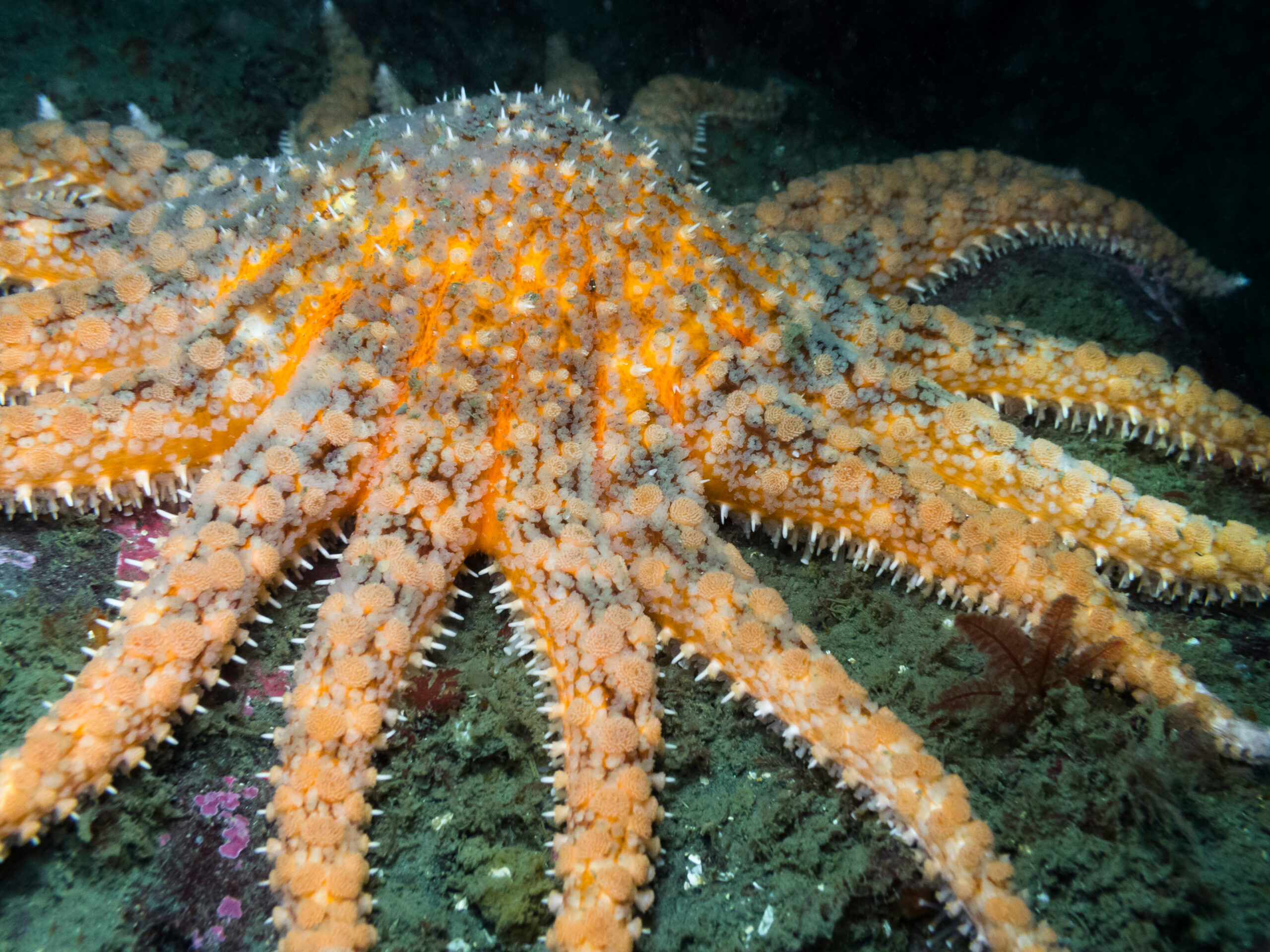
Sea stars are ancient animals that first appeared on Earth around 480 million years ago, more than 200 million years before the dinosaurs. The sunflower sea star is a top-tier predator in its food web, a fast, voracious hunter of urchins. Remove it, and urchin numbers can explode and graze kelp forests down to bare rock.
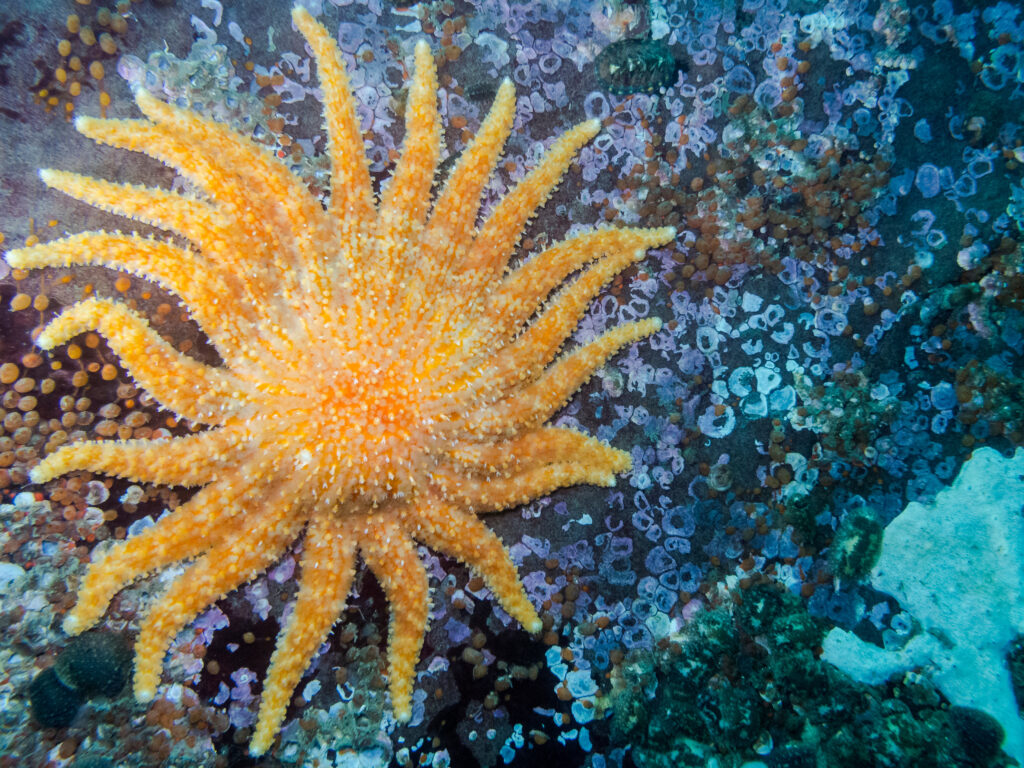
That balance collapsed in 2013, when sea star wasting disease swept the Pacific coast in the largest marine-wildlife disease outbreak on record. The epidemic affected some 20 species and killed an estimated 5.75 billion sea stars. The sunflower sea star was among the hardest hit. It lost more than 90% of its population across a range that stretches from Mexico to Alaska. Researchers at the University of British Columbia and the Hakai Institute have since traced the cause to a strain of the bacterium Vibrio pectenicida, and warming ocean temperatures appear to intensify the disease.
Progress So Far
Recent science offers encouragement. In 2024, a collaboration among California institutions successfully spawned and cross-fertilized gametes from a male and female sunflower sea star and produced fertile eggs, a milestone that opened the door to captive breeding.
How the Species Reintroduction Fund is Helping
With the Colossal Foundation’s support, this Indigenous-led pilot will build the foundation for future recovery: