

Why the Black-Footed Ferret Matters
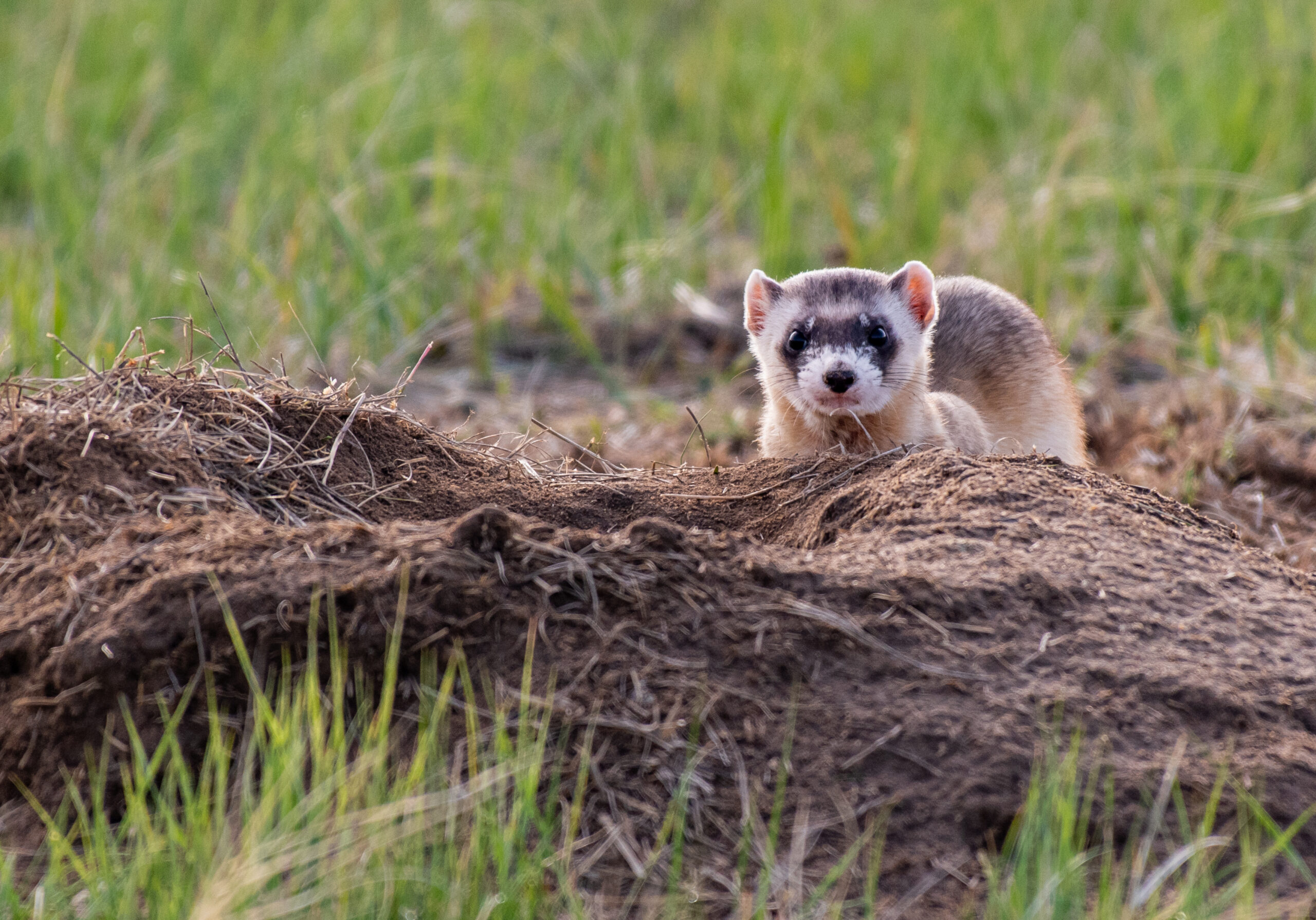
Black-footed ferrets are obligate predators of prairie dogs, hunting them for food and taking over their burrows for shelter, which makes the species entirely dependent on healthy prairie dog colonies to survive. First protected under early federal endangered species law in 1967 and grandfathered into the Endangered Species Act in 1973, the species was presumed extinct twice: once near the end of the 1950s, and again after a small rediscovered population died out in captivity by 1979.
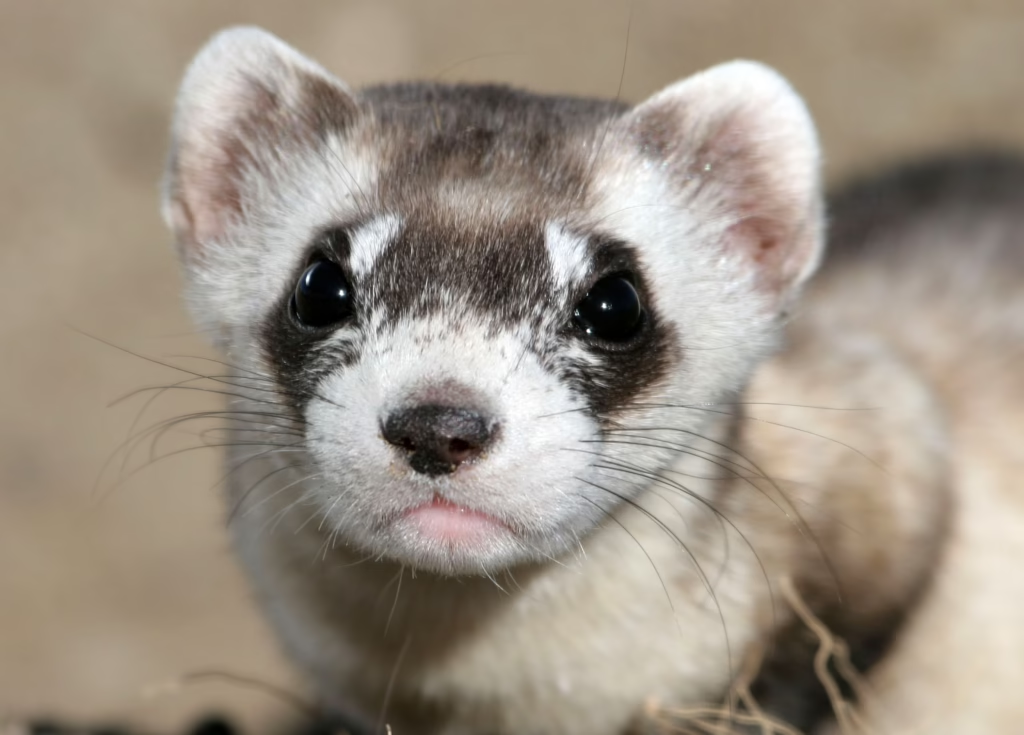
Photo Credit: Kimberly Fraser
But in 1981, a ranch dog named Shep encountered a creature that its Wyoming owners didn’t recognize. They brought it to their town taxidermist, who correctly identified it as the presumed-extinct black-footed ferret. Since their rediscovery, the black-footed ferret was grandfathered into the Endangered Species Act, and since 1992, captive breeding centers have produced more than 9,000 offspring.
However, all 9,000 individuals alive today are derived from just 8 founders, a genetic bottleneck that’s left the species vulnerable to disease.
Progress So Far
TESF has spent decades laying the groundwork for ferret recovery, beginning with an outdoor preconditioning facility at Vermejo Park Ranch in New Mexico, where captive-born ferrets could hone predatory instincts before release.
At Bad River Ranch, roughly 1,500 of the property’s 148,000 acres already support black-tailed prairie dog colonies with an estimated carrying capacity of about 140 ferrets, and TESF aims to more than double that footprint over the next five years through plague mitigation, targeted bison grazing, and prescribed fire.
Genetic diversity efforts have also advanced the recovery: in 2021, a black-footed ferret was successfully cloned by Viagen using preserved genetic material from a female named Willa, whose genome held roughly three times the diversity found in the current population. As of 2025,15 ferrets in the breeding population carry Willa’s genetic material, effectively establishing her as just the eighth founder for the species.
How the Species Reintroduction Fund is Helping
With the Colossal Foundation’s support, TESF will reach key milestones over the coming year: