
Why the Sihek Matters
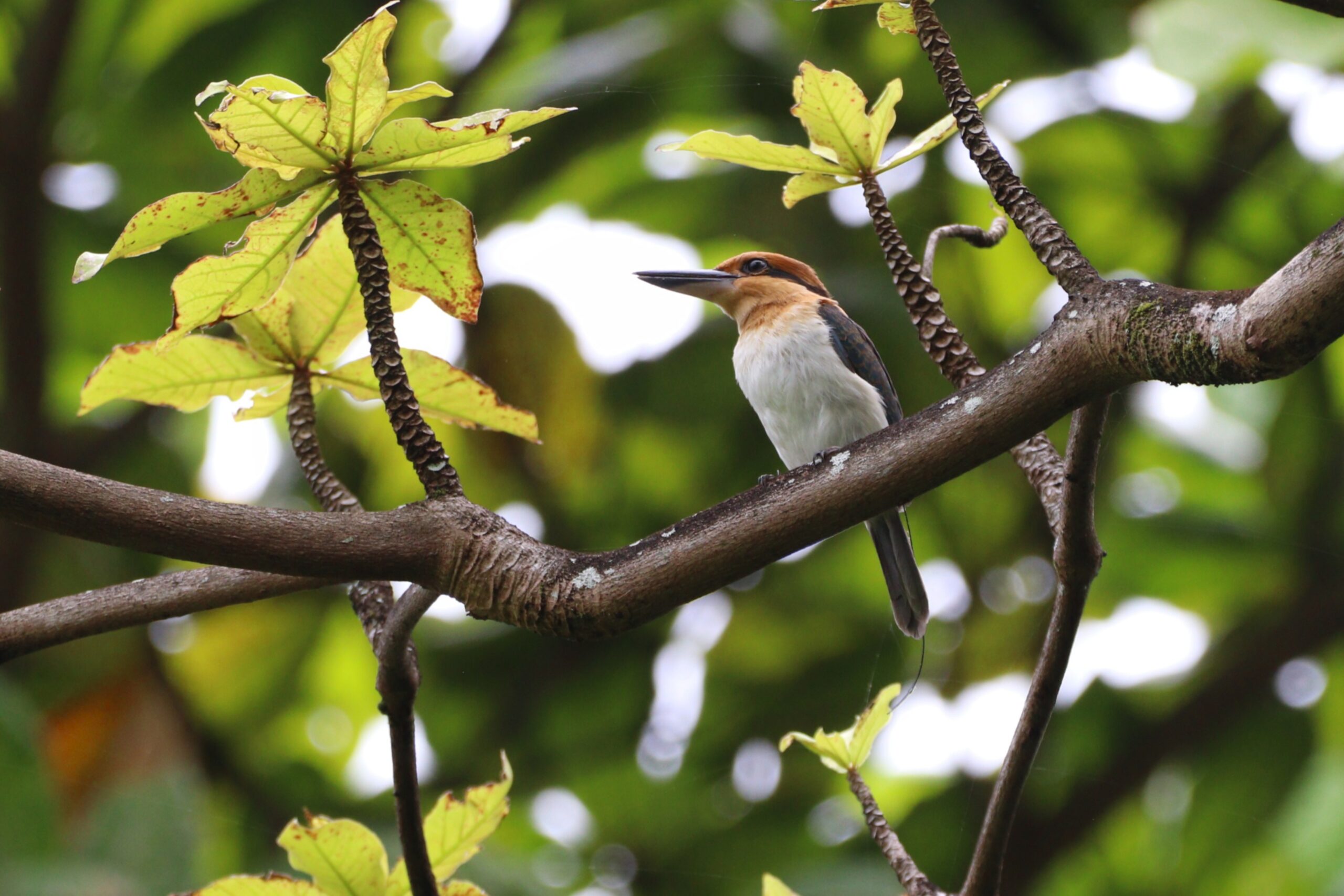
Unlike most kingfishers, the Sihek doesn’t actually fish. It perches on tree branches, then drops to seize skinks, geckos, insects, and small crustaceans off the forest floor.
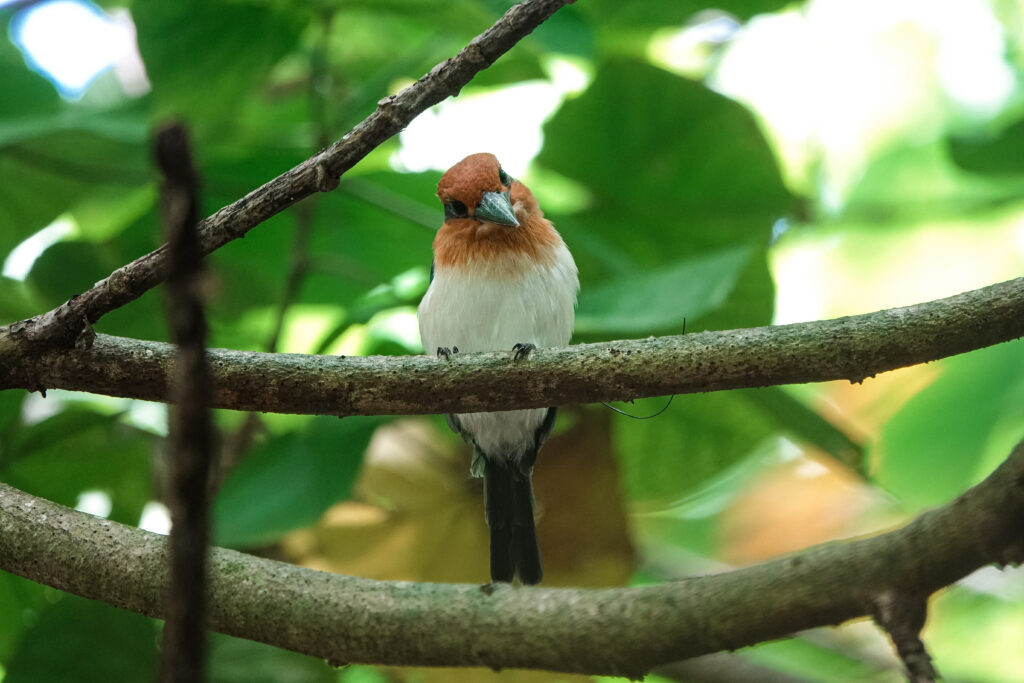
Photo Credit: Jonny Shepherd
Its disappearance from Guam was swift. After brown treesnakes arrived aboard military vessels in the 1940s, the invasive predator devastated the island’s native forest birds, wiping out 9 of Guam’s 11 forest bird species. Between 1984 and 1986, biologists brought 29 of the last wild birds into a conservation breeding program that has sustained the species ever since. The Sihek was last spotted in the wild in 1988.
Because the brown treesnake still persists on Guam, conservationists chose a new home for the Sihek: Palmyra Atoll, a snake-free U.S. National Wildlife Refuge in the central Pacific. The atoll lies roughly 3,700 miles east of Guam.
Progress So Far
A group of nine Sihek were released in Palmyra Atoll in September 2024. And 18 months later, all nine were confirmed alive and thriving, some having even laid their first eggs.
Today, about 100 adult Sihek are housed across 25 AZA zoos and the Guam Department of Agriculture.
How the Species Reintroduction Fund is Helping
With the Colossal Foundation’s support, the Sihek Recovery Program will strengthen this young wild population: